 Lofoten Islands Tours
Lofoten in Winter: What Actually Runs Between November and March

Lofoten in winter is not the closed, frozen version of itself that people imagine. The Gulf Stream keeps the harbours ice-free, the boats sail every month including through the polar night, and February brings the cod fleet and the busiest working season of the year. What genuinely changes is daylight, driving and how many restaurants are open west of Leknes. This page separates the two.
Quick answer
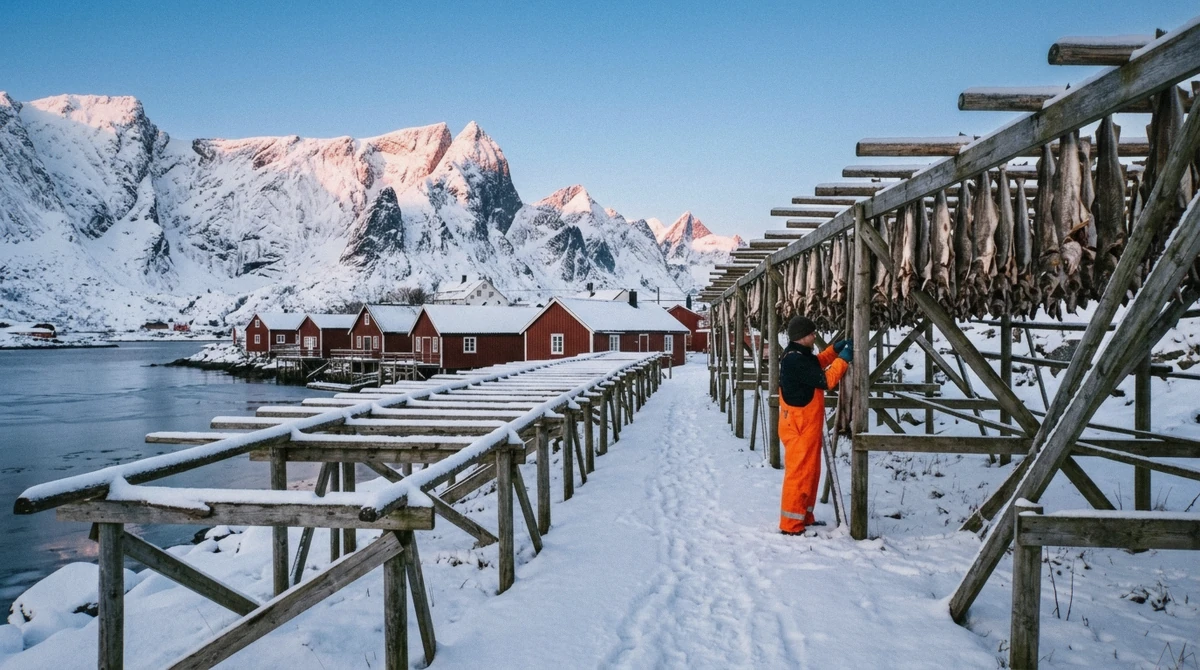
The polar night in Svolvær runs from about 7 December to 5 January, but that means the sun does not clear the horizon, not that it is dark all day: midday gives several hours of blue and pink twilight. February averages about -0.3°C, the coldest month of a mild winter, and by late March you are back to twelve hours of daylight with the aurora season still running. Boat tours sail every month; wind, not cold, is what cancels them.
Key takeaways
- Polar night 7 December to 5 January, with usable twilight around midday, not total darkness.
- Best winter weeks: late February and March, when aurora and daylight overlap.
- Still running: Trollfjord cruises every month, from $108.72.
- February and March bring the Lofotfisket cod season and full harbours.
- Rental cars run winter tyres from November; the wind on exposed bridges is the underrated part.
How Dark It Actually Gets
Polar night is twilight, not blackout
From about 7 December to 5 January the sun stays below the horizon in Svolvær. What you get instead is a long civil twilight: the sky lightens from around ten in the morning, holds a blue and rose glow through the middle of the day, and fades by two in the afternoon.
It is enough light to walk, photograph and take a boat out. It is not enough to hike a mountain or drive the length of the archipelago and see anything. Photographers rate this light highly, and it is the reason a fair number of people come specifically for December.
The light returns fast
After the first week of January the days grow quickly at this latitude. By early February the middle of the day is properly bright, by the end of March you have about twelve hours of daylight, and the aurora season still runs into April.
That overlap is why March is the best winter month for most visitors. You can drive west in daylight, hike something short in the afternoon and still have a dark sky at ten in the evening.
And it is not that cold
February, the coldest month, averages about -0.3°C in Svolvær. Lofoten is one of the largest positive temperature anomalies on Earth for its latitude, and the harbours do not freeze.
The cost of that mildness is water. January and October are the wettest months at around 85 millimetres, and winter weather here arrives as wind and sleet at least as often as it arrives as postcard snow. Waterproofs matter more than a thicker coat.
Daylight, month by month
Numbers help more than adjectives here. These are the practical daylight windows in Svolvær, meaning the hours you can actually do something outdoors, rather than the technical sunrise times.
Plan drives and any walking inside that window and treat everything after it as harbour, food and aurora time. Our full guide to Lofoten Islands tours covers which departures run in the dark months.
| Month | Usable light | Feels like |
|---|---|---|
| November | About 5 hours | Short grey days, low sun, cheapest month |
| December | Twilight only, 3 to 4 hours | Polar night from about the 7th; blue and pink midday |
| January | 4 to 6 hours, rising fast | Sun back from about the 5th; best aurora odds |
| February | 6 to 9 hours | Cod season, snow, proper winter light |
| March | 9 to 12 hours | The best trade-off: daylight and aurora together |
What Still Runs, and What Closes
The honest inventory
The east stays open year-round: Svolvær, Kabelvåg and Henningsvær keep restaurants, hotels and shops running through the winter. West of Leknes it thins out, and in the small villages a number of cafés and seasonal museums shut between October and April.
Boats are the reliable part. All four Trollfjord operators sail through the winter and the eagles do not migrate. What closes for the season is the kayaking, which is a midnight-sun product here rather than a year-round one.
| What | In winter | Notes |
|---|---|---|
| Trollfjord boat tours | Running | Every month, including the polar night. Wind cancels, cold does not |
| Sea eagle safaris | Running | Birds are resident; winter sightings are as good as summer |
| Midnight sun kayaking | Closed | Exists only from about 25 May to 18 July |
| Guided day tour to Å | Running, shorter light | The drive works, but the villages are seen in twilight in December |
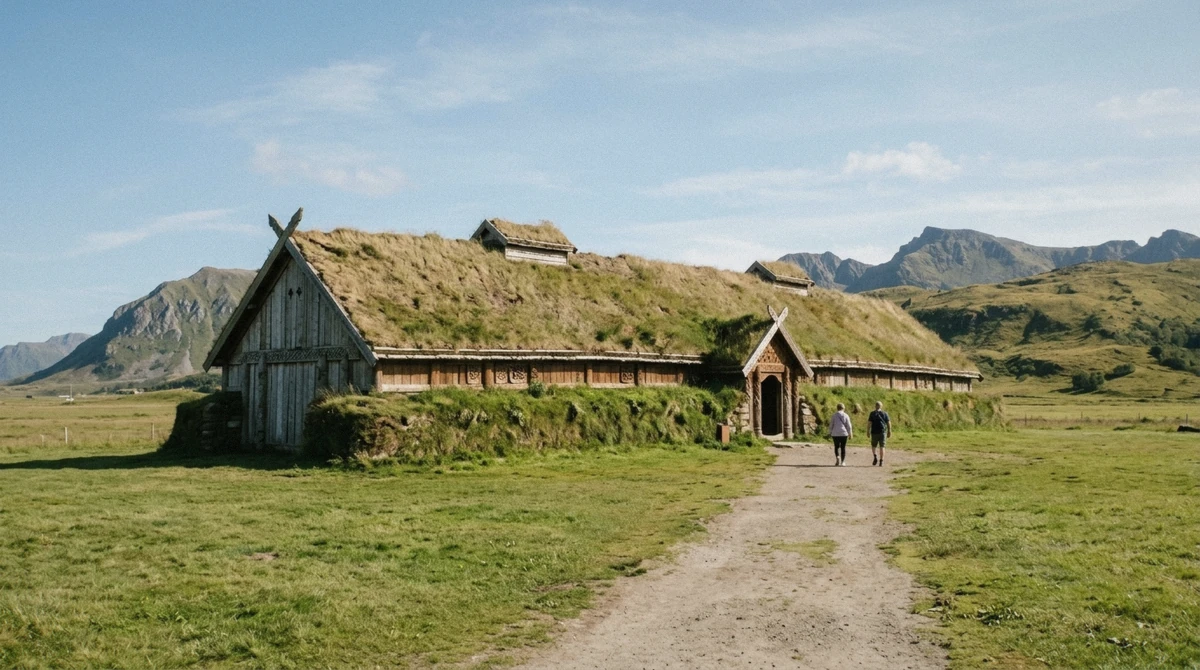
| Lofotr Viking Museum | Reduced hours | Off-season rates apply; check the day before |
| Reinebringen stairs | Not advised | Stone steps ice up; wet snow makes it genuinely dangerous |
| Restaurants west of Leknes | Patchy | Several close for the season; Svolvær and Henningsvær stay open |
Prices go the other way
Accommodation in November is a fraction of its July price, and the western villages that book out six months ahead in summer can often be had a fortnight out in the dark months.
Tour prices do not move with the season. A Trollfjord cruise costs the same in January as in July, which means winter is when the ratio of what you pay to what you get is at its best here.
Lofotfisket: Why Winter Is the Working Season
The cod arrive, and so does everyone else
From late January into April the skrei migrate from the Barents Sea to spawn off Lofoten, and the fishing fleet follows them. Harbours that are quiet in November fill with boats, the wooden drying racks go up along the shorelines, and the villages work at a pace summer visitors never see.
The 2026 Barents Sea quota was cut 16 percent to 285,000 tonnes, so the fleet is smaller than it was a decade ago. The season is still the reason these villages exist, and February and March are when you can watch it from any harbour wall for nothing.
It also means beds in Svolvær and Ballstad are tighter in February than the visitor numbers alone would suggest, because the crews need somewhere to sleep too.
Driving in Winter
The road is fine; the wind is the problem
The E10 is ploughed and salted, rental cars come on studded or winter tyres from November, and Norwegian winter road maintenance is serious. Most visitors cope fine.
What catches people is exposure. The bridges between islands sit high over open water and take crosswinds hard, and a squall can drop visibility to nothing in minutes. Tunnels are safe and warm; the stretches between them are where you slow down.
Daylight is the other constraint. In December you have a workable window from about ten to two, so a drive to Reine and back is the whole day, and it is done in twilight at both ends.
- Book a car with winter tyres as standard and confirm it at the desk
- Plan drives inside the daylight window, not around it
- Check road status before committing to a long run west
- Fill up before Leknes; stations thin out towards Å
- Traction spikes for your boots, which cost little and save the trip
- A second plan for every day, because storms rearrange the first one
Flights, ferries and the days a storm wins
Widerøe's small aircraft from Bodø are the first thing weather stops. Diversions to the other Lofoten airport, or back to Bodø, are routine in winter, and a cancelled inbound flight can cost a day of a short trip.
The Bodø to Moskenes ferry is more robust but sails an exposed crossing, and in a serious storm departures are dropped. Bus 300 keeps running when the roads are open, which is most of the time.
The practical rule for a winter trip: never plan a connection that depends on a same-day arrival, keep the last day free of anything you paid for, and accept that one day in a week here belongs to the weather rather than to you.
Which Winter Month to Book
If the aurora is the whole point
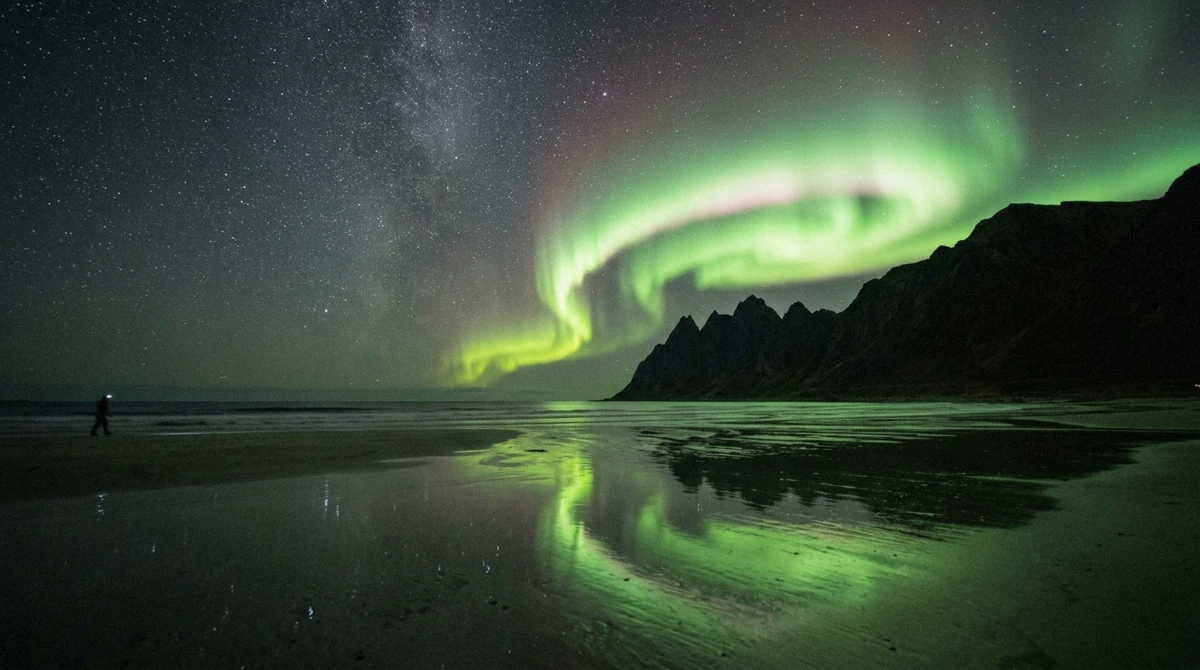
Late September to March. December and January give the deepest dark; March gives you dark evenings plus a usable day.
If you want to see the fishery working
February or March, when the skrei season fills the harbours and the drying racks go up.
If you are here to photograph
December, for four hours of blue and rose twilight that photographers travel specifically for.
If you want the cheapest week
November. Lowest accommodation prices of the year, empty roads, and the boats still sail.
If you need daylight and flexibility
Late March, or wait for the summer version instead. Midwinter is not the trip for a fixed itinerary.
Winter Against Summer, Honestly
What we genuinely like
- Aurora on clear nights from September to early April
- The cod season in February and March, with harbours at full working pace
- Accommodation at a fraction of July prices, often bookable a fortnight out
- Snow to the waterline, and light photographers travel for
- The boats run and the fjord is empty of other vessels
The honest downsides
- Short daylight, down to a few usable hours around the polar night
- More cancellations, since winter brings the wind that grounds boats
- Restaurants and small museums west of Leknes close for the season
- Hiking is limited, and Reinebringen is unsafe in wet snow
- Weather can close roads or ground the Widerøe flights from Bodø
Who it's NOT for: Anyone whose trip depends on a fixed itinerary, long hikes or guaranteed sightseeing hours. Winter here rewards people with two plans a day and a flexible attitude about which one happens.
Lofoten in Winter: Questions
Is it worth going to Lofoten in winter?
Yes, if you come for the aurora, the light and the working fishing season rather than for hiking and long days. February and March give you snow, the cod fleet, and enough daylight to see the archipelago, with prices well below summer. December is for photographers who want the blue twilight and do not mind that it lasts four hours.
How dark is Lofoten in winter?
During the polar night, from about 7 December to 5 January, the sun does not clear the horizon, but midday still brings several hours of blue and pink twilight. It is enough to walk, photograph and take a boat out. By late March, daylight is back to about twelve hours.
Is Lofoten accessible in winter?
Yes. Flights from Bodø to Svolvær and Leknes run year-round, the ferry from Bodø to Moskenes sails, bus 300 works the E10, and the roads are ploughed. Weather delays happen, particularly with the small aircraft, so leave slack around connections.
How cold does Lofoten get?
Milder than its latitude suggests. February, the coldest month, averages about -0.3°C in Svolvær and the harbours stay ice-free thanks to the Gulf Stream. The problem is wet and wind rather than deep cold: January is one of the wettest months at around 85 millimetres.
What is there to do in Lofoten in winter?
Chase the northern lights, take a Trollfjord cruise with snow to the waterline, watch the Lofotfisket cod season in February and March, and visit the Lofotr Viking Museum on the short days. Hiking is the thing that drops off the list.
Do tours run in Lofoten in winter?
The boat tours run every month of the year, including through the polar night, and prices do not change with the season. Cancellations come from wind rather than from cold or darkness. The midnight-sun kayak tour is the exception: it exists only between about 25 May and 18 July.
What should you pack for Lofoten in winter?
Waterproofs before insulation, because the winter here is wet as often as it is snowy. Add a warm hat and gloves for boat decks, traction spikes for icy paths, and boots you can stand still in for two hours while you wait for the sky to do something.