 Lofoten Islands Tours
Where to Stay in Lofoten, and What Each Base Costs You

Deciding where to stay in Lofoten is really a decision about driving. The archipelago is 130 kilometres end to end on one road, so a bed in Reine and a bed in Svolvær put you in two different trips: one wakes up inside the postcard, the other walks to the boats. This page splits the islands into three bases, says plainly what each one costs you in road time, and covers the accommodation tax that arrives in 2027.
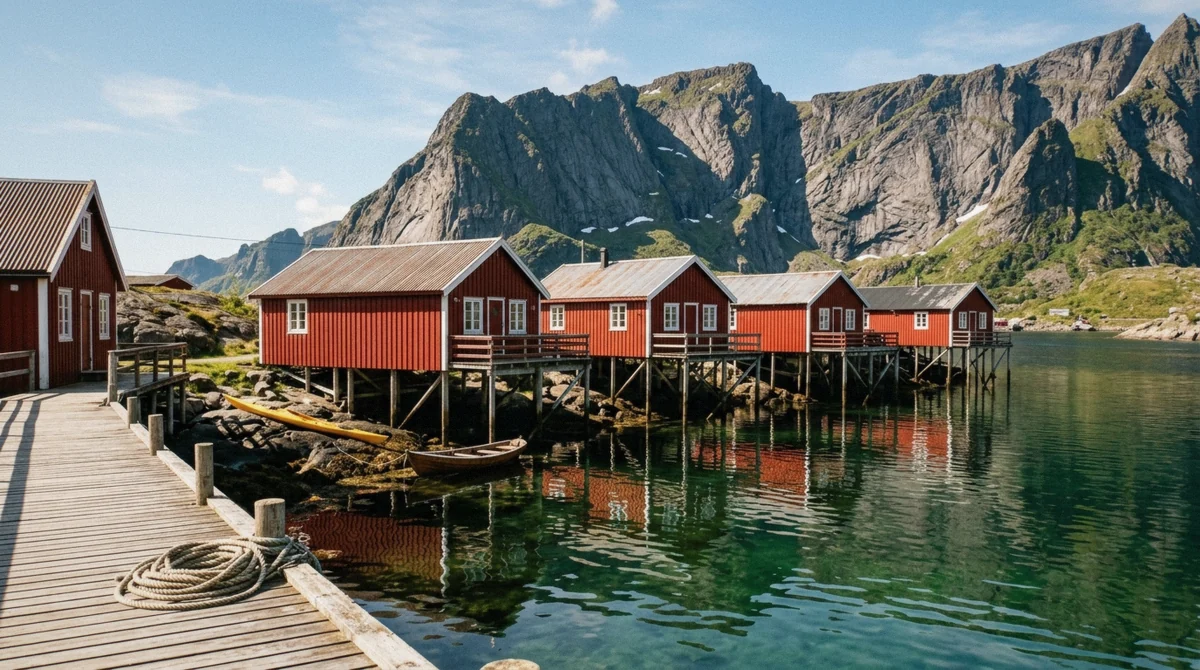
Quick answer
Svolvær if you are here for boat tours or travelling without a car: every departure, the airport and the bus stop are within a few minutes on foot, and the town stays open all winter. The middle, around Leknes and Ballstad, for beaches, hikes and the Viking museum. Reine and Hamnøy if the western landscape is the whole point, accepting a two-hour drive each way to reach a Svolvær quay. Rorbuer, the converted fishermen's cabins, price by season far more than by standard.
Key takeaways
- Base in Svolvær and every boat tour is a walk away; base in Reine and it is 120 km each way.
- No car? Svolvær is the only base that genuinely works, since bus 300 runs the E10 twice a day.
- The middle of the archipelago puts Haukland, Uttakleiv and the Lofotr museum within 30 minutes.
- Summer in the western villages books out months ahead; the dark months go a fortnight out.
- From 1 January 2027 Lofoten plans to charge up to 3 percent on accommodation. Nothing applies in 2026.
Pick Your Base by the Trip You Are Taking
If you are here for the fjord and the boats
Svolvær. Every departure on this site leaves from its harbour, the airport is ten minutes away, and you will not drive at all.
If you have no rental car
Svolvær, without hesitation. It is walkable, it has the express boat pier and the bus stop, and the guided day tour picks up there for the western villages.
If beaches and hiking are the point
The middle: Leknes, Ballstad or a farm stay nearby. Haukland, Uttakleiv and the trailheads are within half an hour, and Reine is an hour.
If you came to photograph Reine and Hamnøy
Stay west. Being on the bridge at six in the morning is worth the driving penalty, and in summer the light at midnight makes it worth more.
If you are travelling in December or January
Svolvær or Henningsvær. Daylight is short, several western restaurants close for the season, and you do not want a two-hour drive at each end of a four-hour day.
If you are splitting a week
Three nights east, three nights west. It costs one packing session and removes the archipelago's only real problem.
Svolvær and the East
The practical base
Svolvær is the largest town in Lofoten and the only place where the airport, the bus stop, the express boat pier, the shops and every tour quay sit inside a walkable centre. If your trip is built around the fjord, this is the answer and there is not much to debate.
It is a working town rather than a picture-postcard one, which some visitors hold against it. What that buys you is restaurants that open in February, a supermarket that keeps normal hours, and hotels with staff on the desk at ten at night.
Kabelvåg, five kilometres west, is the quieter alternative with an older centre. Henningsvær, twenty-five kilometres out on its bridges, is the prettiest base in the east and stays busy year-round, though you will drive for groceries.
It is also the base that matches the rest of this site: the tours we compare all leave from its harbour, the fjord cruises sail from the same quay year-round, and the itinerary page assumes it as the starting point for a first trip.
What it costs you
Distance west. Svolvær to Reine is about 120 kilometres, which is an hour and forty minutes on paper and two hours or more in July traffic. A day at the western villages from Svolvær is a full day, not an afternoon.
The fix, if you have no car, is the nine-hour guided run to Å at $209.04, which covers Reine, Hamnøy, Sakrisøy and Å with a guide and puts you back at your hotel in the evening.
The Middle: Leknes, Ballstad and the Beaches
An hour from everything
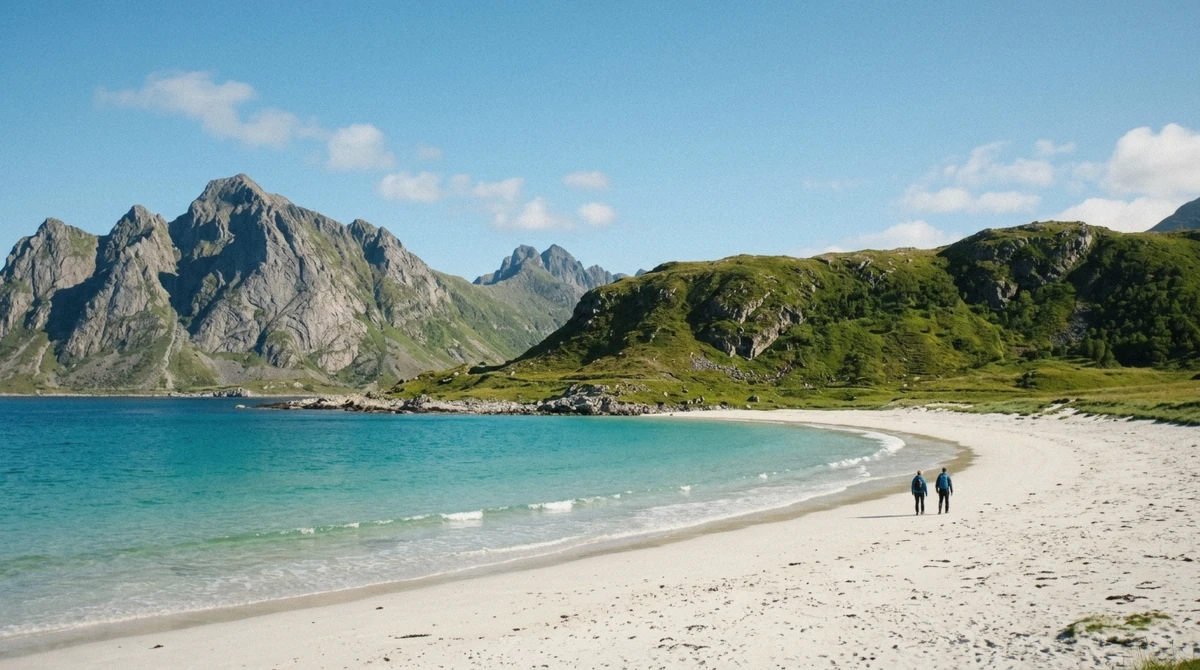
The middle of the archipelago is the compromise that actually works: roughly an hour from Svolvær, an hour from Reine, with the best beaches and the Viking museum on your doorstep.
Leknes itself is a service town with an airport and supermarkets rather than charm, so most visitors stay just outside it, in Ballstad, on the Vestvågøy farms, or near the north-coast beaches. Haukland and Uttakleiv are fifteen to twenty minutes away, the Lofotr Viking Museum at Borg is about the same, and the trailheads for Ryten and Kvalvika are half an hour west.
This is also where the largest supply of self-catering cabins sits, which matters in a country where eating out three times a day gets expensive fast.
What a middle base puts within reach
The case for the middle is that almost nothing is more than half an hour away, which is not true of either end. It is also the area where self-catering cabins are most common, and cooking two meals a day out of a supermarket is the single biggest saving available in Norway.
What you give up is atmosphere. Leknes is a place people live and work rather than one they photograph, so if the evening view from the window matters, look at Ballstad or the farms on the north coast instead.
- Haukland and Uttakleiv beaches: 15 to 20 minutes
- Lofotr Viking Museum at Borg: about 20 minutes
- Ryten and Kvalvika trailhead: about 30 minutes west
- Reine and the western villages: about 1h10 off-peak
- Svolvær and the boat quays: about 1 hour
- Leknes airport and supermarkets: on the doorstep
The West: Reine, Hamnøy and Å
Sleeping inside the photograph
Staying west puts you under Reinebringen with the ferry terminal at Moskenes ten minutes away and the most photographed cluster of buildings in Norway outside your window. Get up at six in July and the Hamnøy bridge is empty; the coaches do not arrive until eleven.
The trade-offs are real. Restaurant choice is thin and thinner in winter, prices in July are the highest in Lofoten, and any Svolvær-based tour costs you four hours of driving on top of the tour itself.
The workaround most people land on: book the fjord cruise for the day you arrive or the day you leave, when you are passing through the east anyway.
| Base | To Svolvær quay | To Reine | Best for | Winter |
|---|---|---|---|---|
| Svolvær | Walk | About 2 hours | Boats, no car, winter trips | Fully open |
| Kabelvåg | 10 min | About 2 hours | Quieter east, still practical | Mostly open |
| Henningsvær | 30 min | About 1h45 | Prettiest eastern base | Open year-round |
| Leknes and Ballstad | About 1 hour | About 1h10 | Beaches, hikes, museums | Partly open |
| Reine and Hamnøy | About 2 hours | Walk | Photography, the western landscape | Thin on services |
| Å | About 2h15 | 10 min | End-of-the-road quiet | Largely closed |
Rorbuer, Camping and What Sleeping Here Costs
What a rorbu actually is
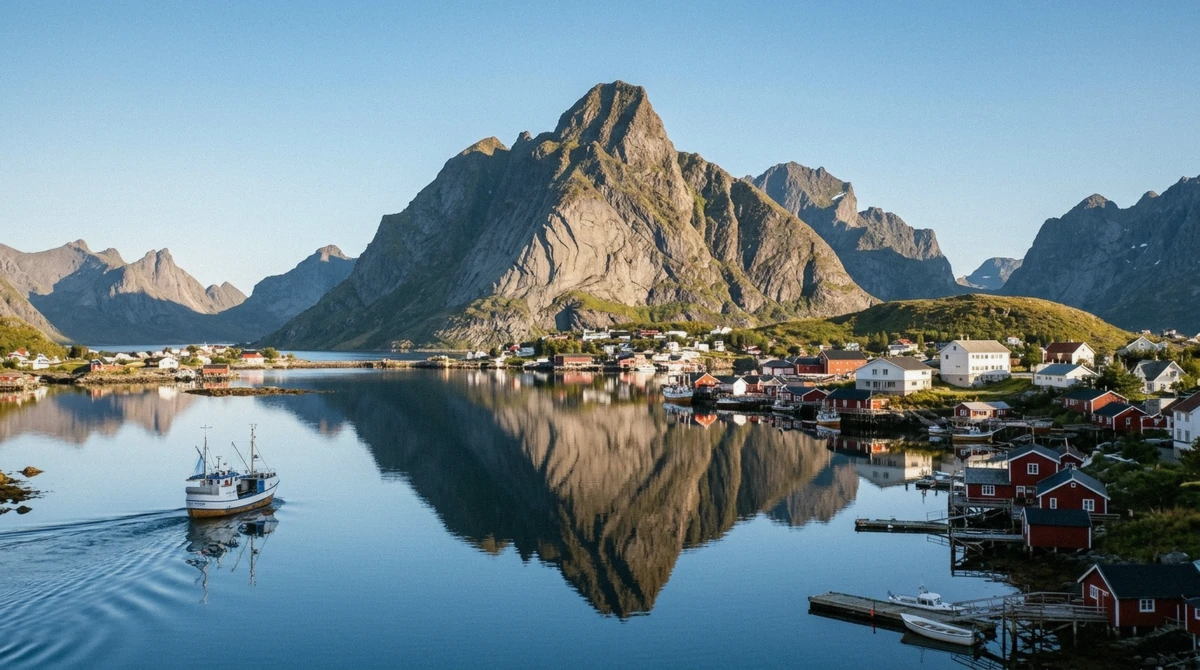
Rorbuer are the red cabins on stilts over the water, originally seasonal quarters for the fishermen who came for the winter cod and now the standard Lofoten accommodation. Most are genuine conversions rather than replicas, most have a kitchen, and the good ones open straight onto the water.
Standards range from basic bunks to hotel-grade suites, and price tracks season far more than it tracks standard. The same cabin in Reine in July and in November are different financial propositions entirely, which is the strongest argument there is for a shoulder-season trip.
Camping and campervans are widespread and legal within the rules, though wild camping has been tightened at the pressure points, and several municipalities now direct vans to designated sites. Read the local signage rather than the general right-to-roam summary.
| Type | Typical setup | Best for | Watch for |
|---|---|---|---|
| Rorbu cabin | Converted fisherman's cabin on stilts, kitchen, 2 to 8 beds | Families, groups, self-catering | Prices multiply in July; basic and premium look alike online |
| Hotel | Svolvær, Leknes, Henningsvær | Winter trips, no car, late arrivals | Limited outside the towns |
| Guesthouse or farm stay | Vestvågøy and the middle | Beaches and hikes, quieter nights | Often no restaurant nearby |
| Campervan | Designated sites, hook-ups at the harbours | Flexibility and cost | Wild camping tightened at the pressure points |
| Camping | Formal campsites near the villages | Summer only, cheapest option | Wind is the limiting factor, not cold |
The accommodation tax arriving in 2027
Norway's Visitor Contribution Act took effect on 1 July 2026, allowing municipalities to charge up to 3 percent on paid overnight stays. Several travel outlets reported that Lofoten would start charging in summer 2026. That is not what happened.
The Lofoten municipalities vote on local regulations in September 2026 and the stated goal is to begin collecting on 1 January 2027, either individually or through a shared arrangement, with 70 percent of the revenue staying in the municipality that collected it. Nothing is added to a 2026 booking.
When it starts it applies to hotels, guesthouses and short-term rentals, not to tours, and people sleeping in their own campervan, tent or boat are exempt. Last verified: August 2026, against the Norwegian government's own documentation and local council reporting.
When to book
For June to August in the western villages, six months out is not paranoid. For the same cabins in November through February, a fortnight is usually enough.
The exception is February and March, when the cod season fills beds in Svolvær and Ballstad with fishing crews as well as visitors. If you are coming for Lofotfisket, book like it is summer.
Our recommendation: for a first trip of four nights or fewer, stay in Svolvær and take the guided day west. You lose the sunrise on Hamnøy bridge and you gain four hours of your holiday back.
If the dates are still open, pick the season first and the base second: what winter actually looks like here and the midnight sun window change the answer more than any hotel does.
Where to Stay in Lofoten: Questions
Where is the best place to stay in Lofoten?
Svolvær for a first trip, especially without a car: every boat tour leaves from the harbour, the airport is ten minutes away and the town works year-round. Stay west in Reine or Hamnøy if photographing the western villages is the main reason you came, and accept about two hours of driving each way to reach the eastern quays.
Which part of Lofoten is best to stay in?
It depends what you are here for. East for boats and practicality, middle for beaches and hikes with everything within an hour, west for the landscape everyone photographs. Splitting a week into three nights east and three nights west removes the archipelago's only real logistical problem.
Is it better to stay in Svolvær or Reine?
Svolvær if you want the fjord tours, restaurants that open in winter and no driving. Reine if you want to walk out of your cabin into the view. The measurable difference is 120 kilometres and about two hours in each direction, which on a three-day trip is most of a day.
What is a rorbu?
A converted fishermen's cabin on stilts over the water, originally built as seasonal quarters for the crews who came for the winter cod. Most now have a kitchen and a bathroom, most are genuine conversions rather than new builds, and their prices move with the season far more than with the standard of the fittings.
How far in advance should you book accommodation in Lofoten?
Six months for June to August in the western villages, where supply is small and demand is not. A fortnight is usually enough from November to January. February and March are the exception in the east, because the cod season fills beds in Svolvær and Ballstad with fishing crews.
Is there a tourist tax on accommodation in Lofoten?
Not in 2026. Norway's visitor levy law took effect on 1 July 2026, but the Lofoten municipalities vote on local rules in September 2026 and plan to start collecting from 1 January 2027, at up to 3 percent on paid accommodation. Tours are not covered, and campers in their own van, tent or boat are exempt.
Can you stay in Lofoten without a car?
Yes, based in Svolvær. The harbour, shops, hotels, bus stop and express boat pier are within a few minutes on foot, and the guided day tour handles the western villages. Bus 300 runs the E10 twice a day in each direction if you want to move between villages, but it is unforgiving of a missed connection.